B9 Clivus
Typology
Multi-family house
Data
6’180m3 BV SIA416, 1’870m2 GFA, 950m2 FA
Status
under construction
Year
2025 - 2028
Collaboration
Studio Miskeljin, Visualisations

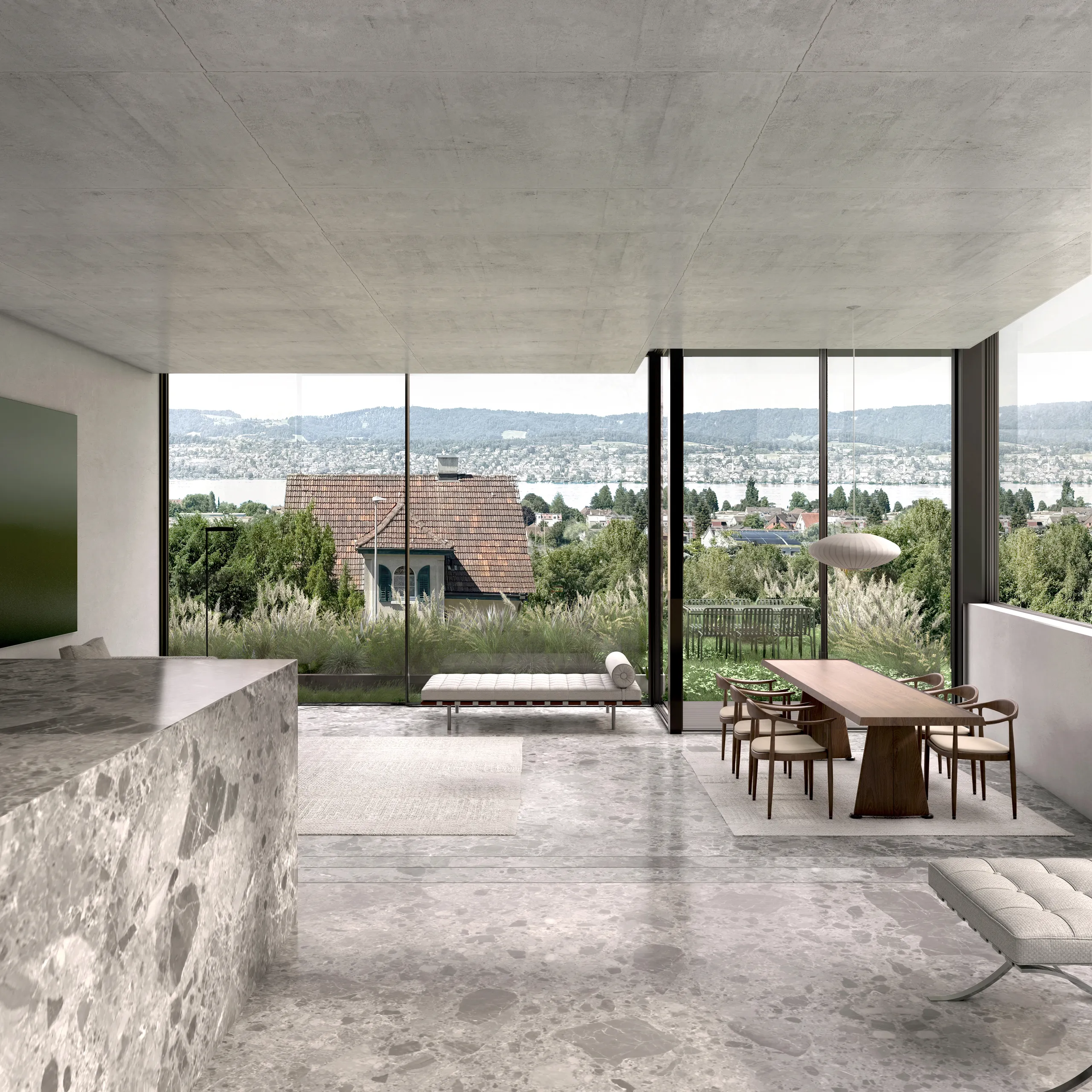
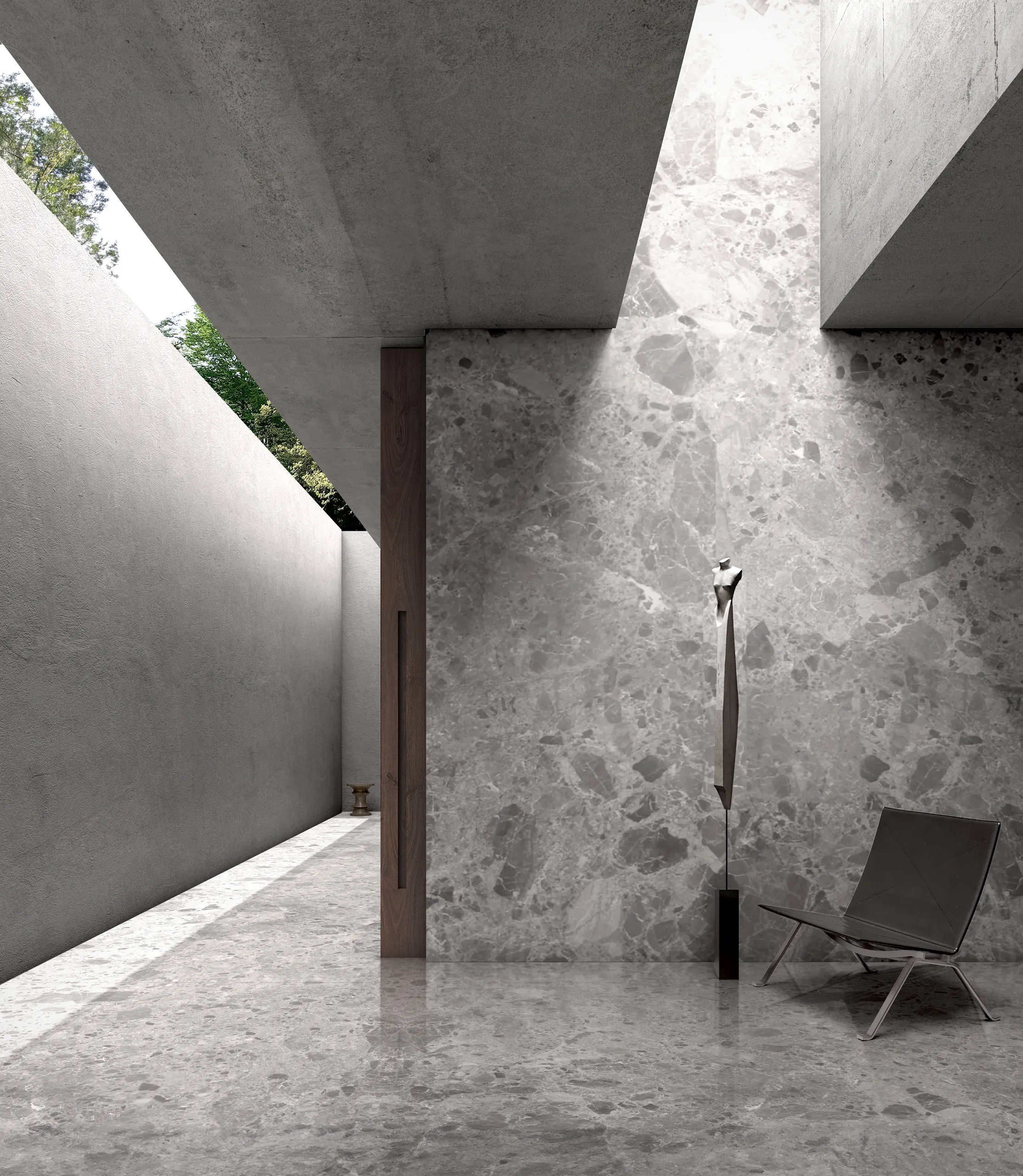
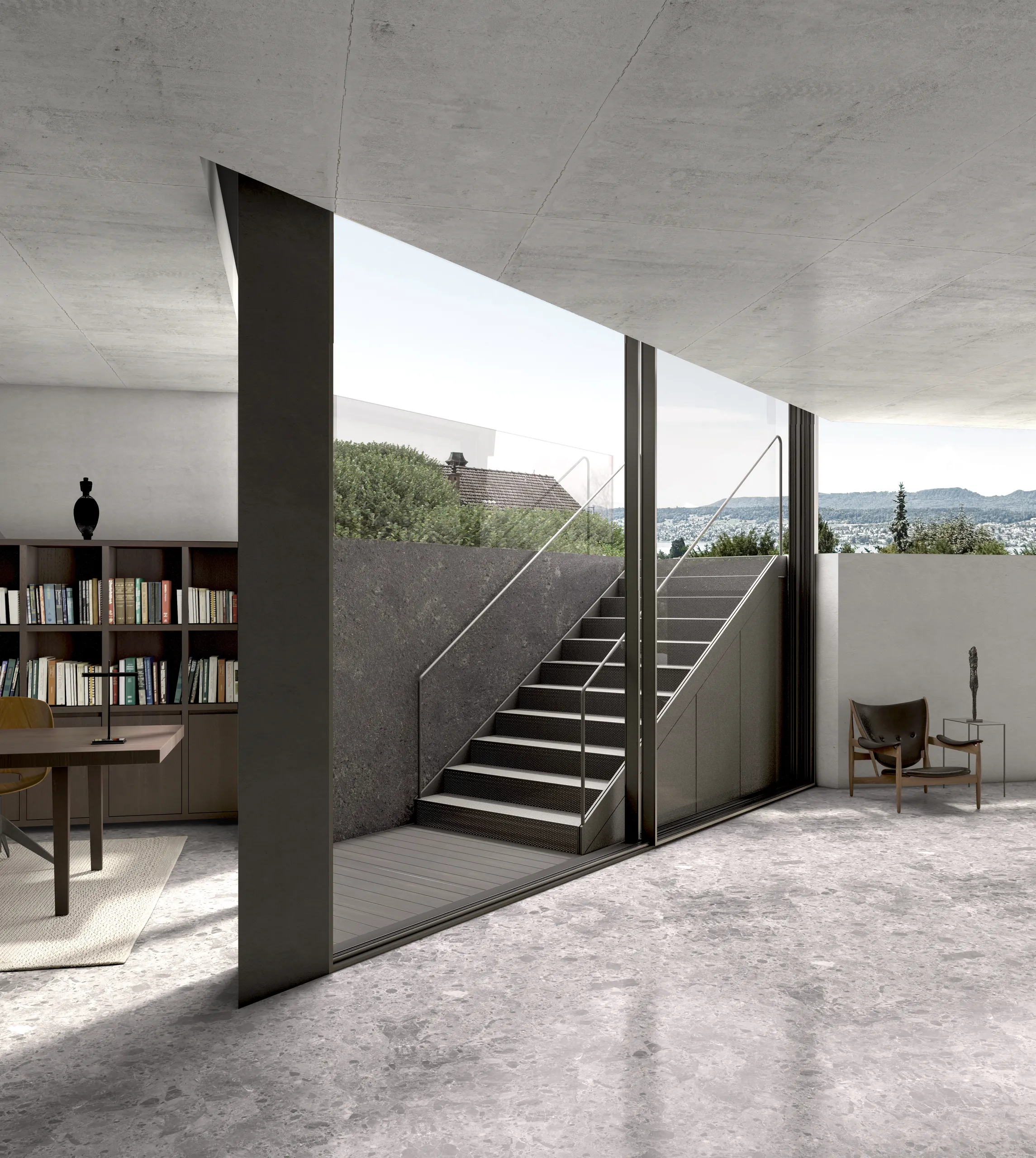
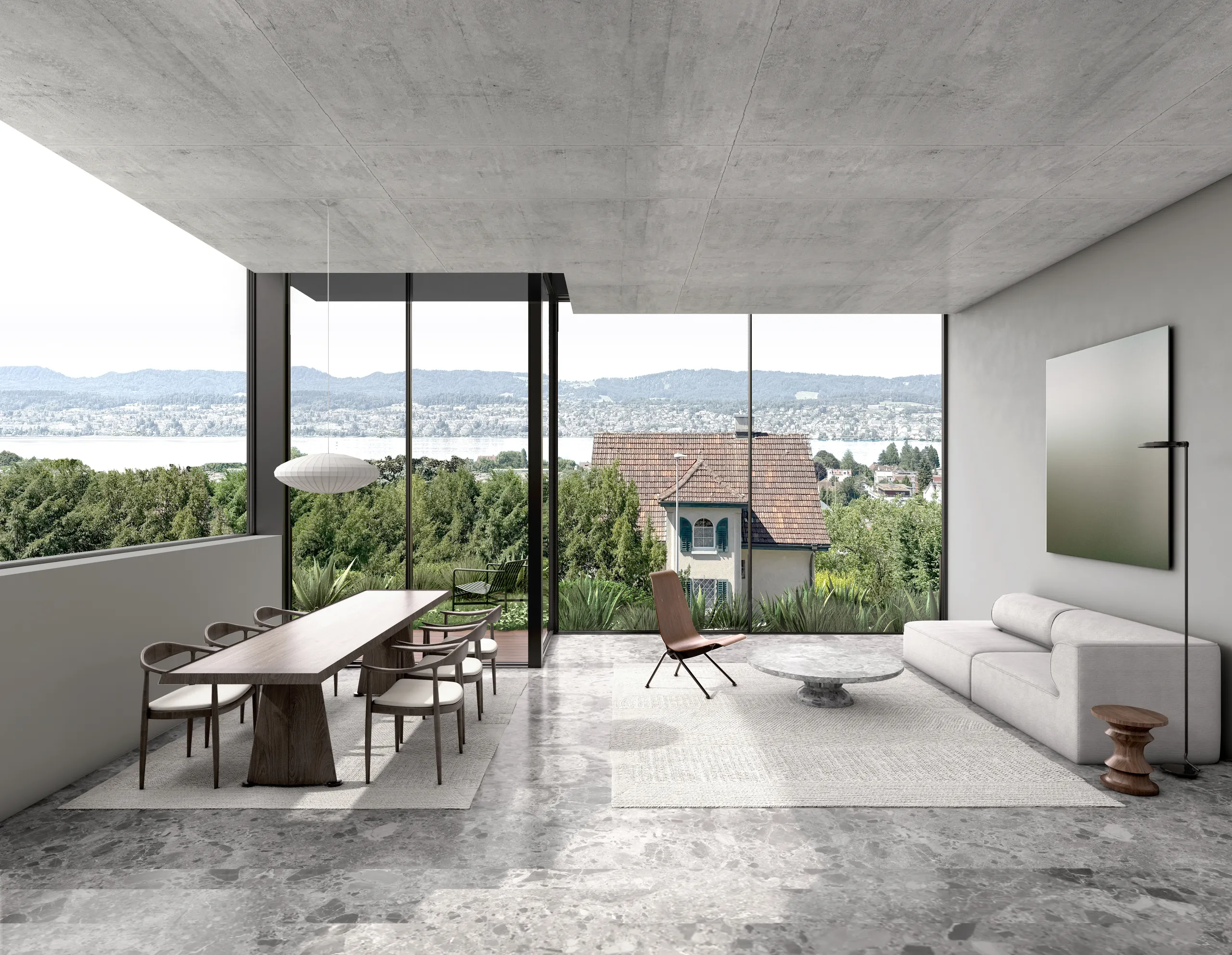
Typology of the slope
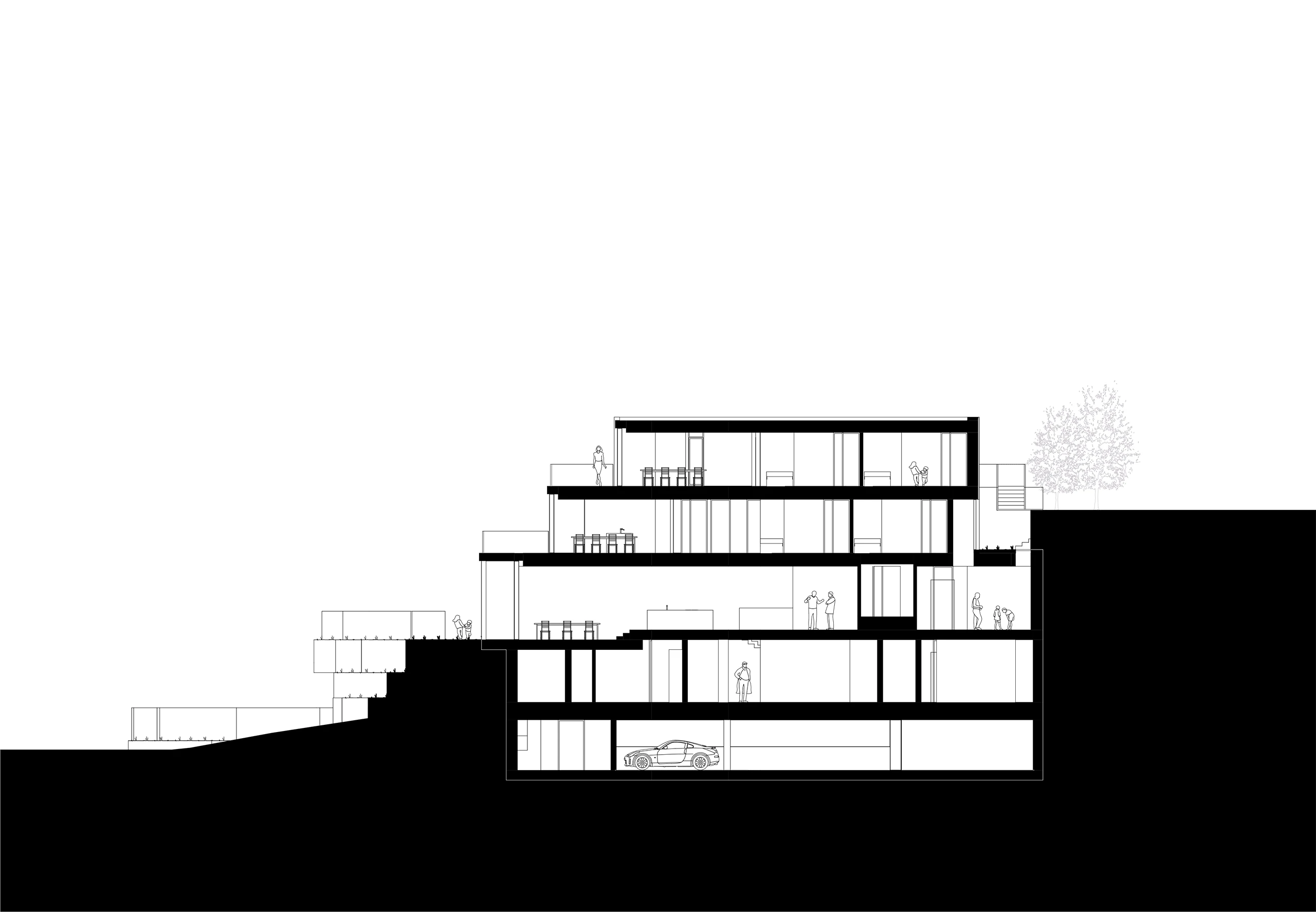
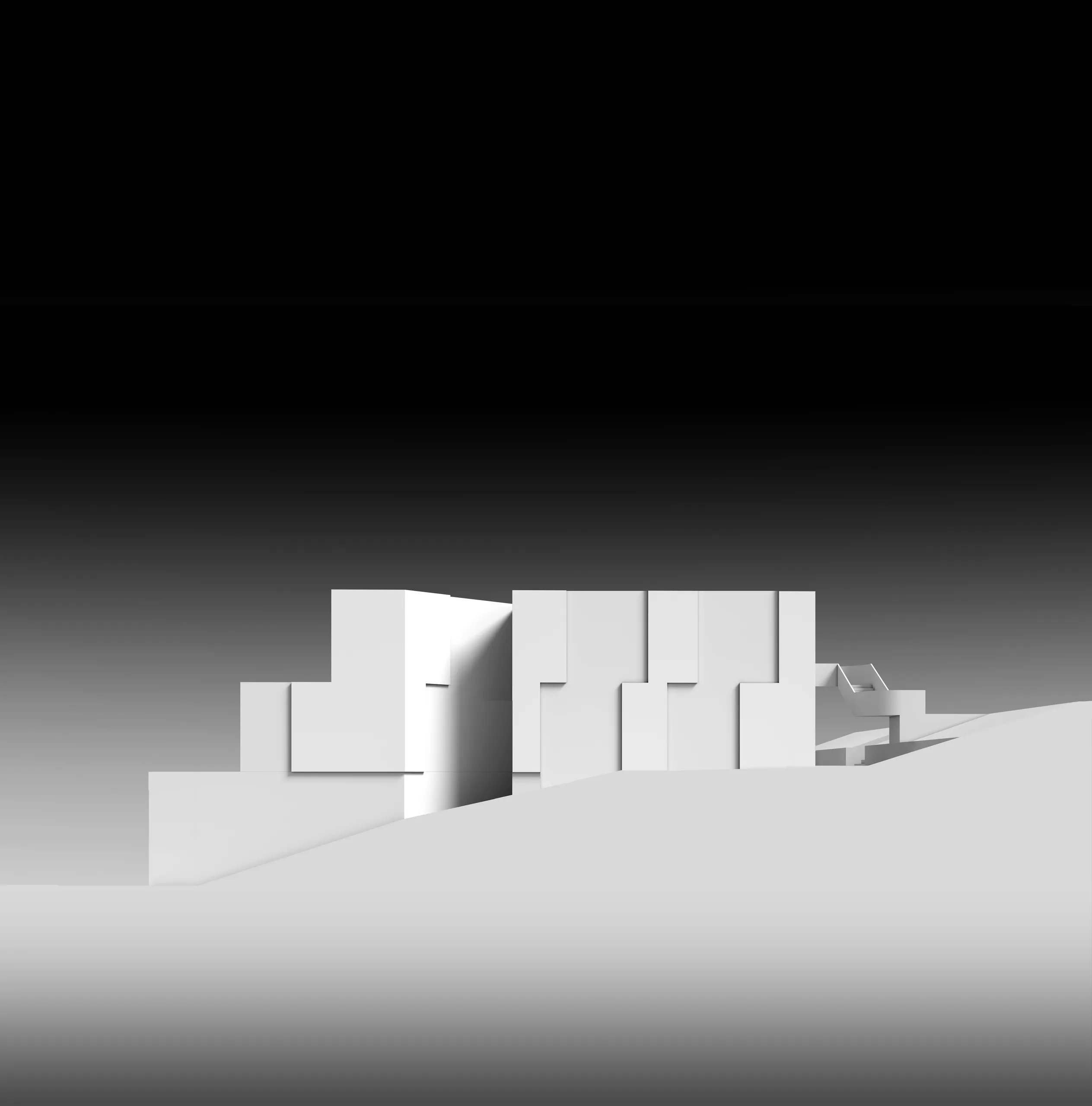
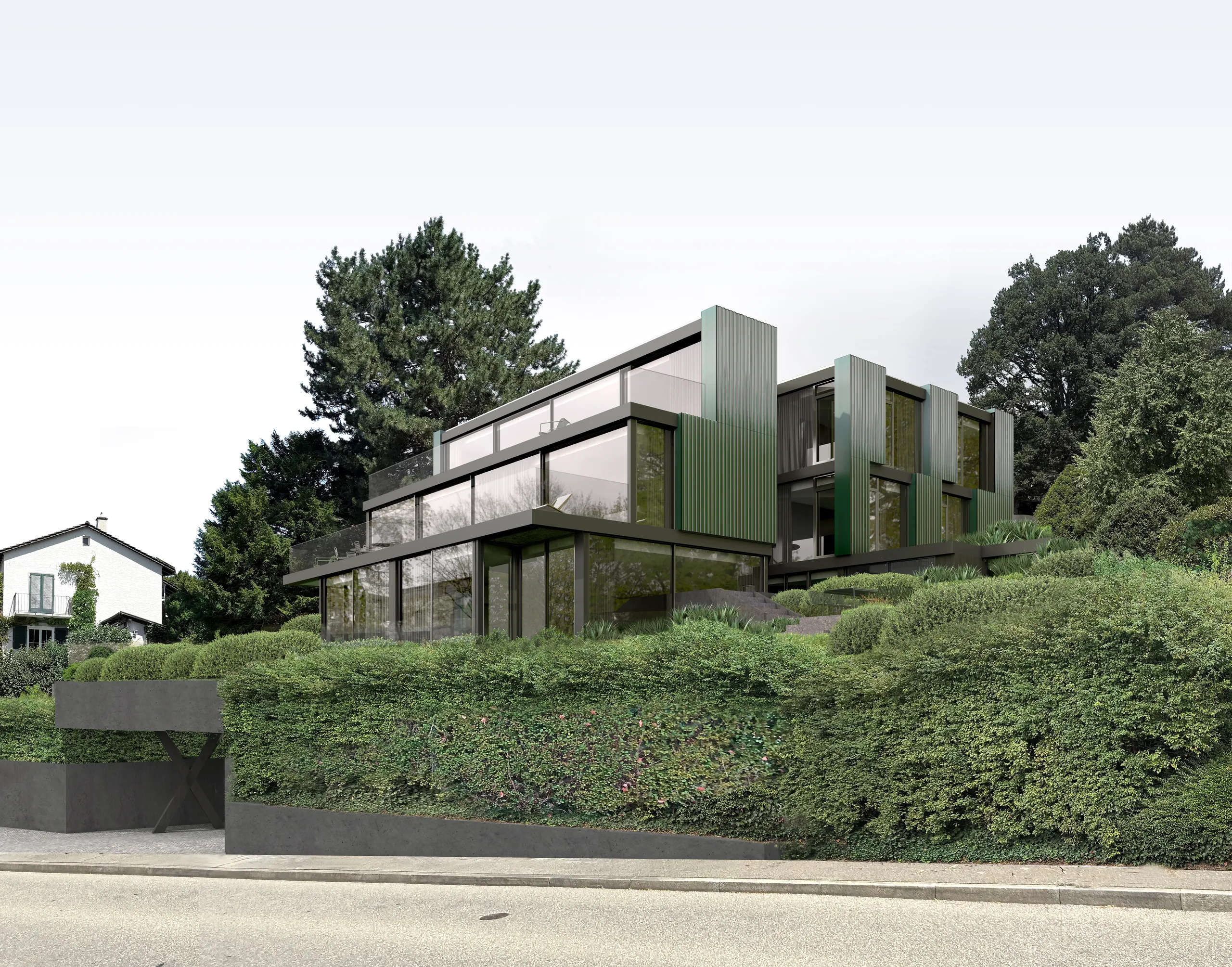
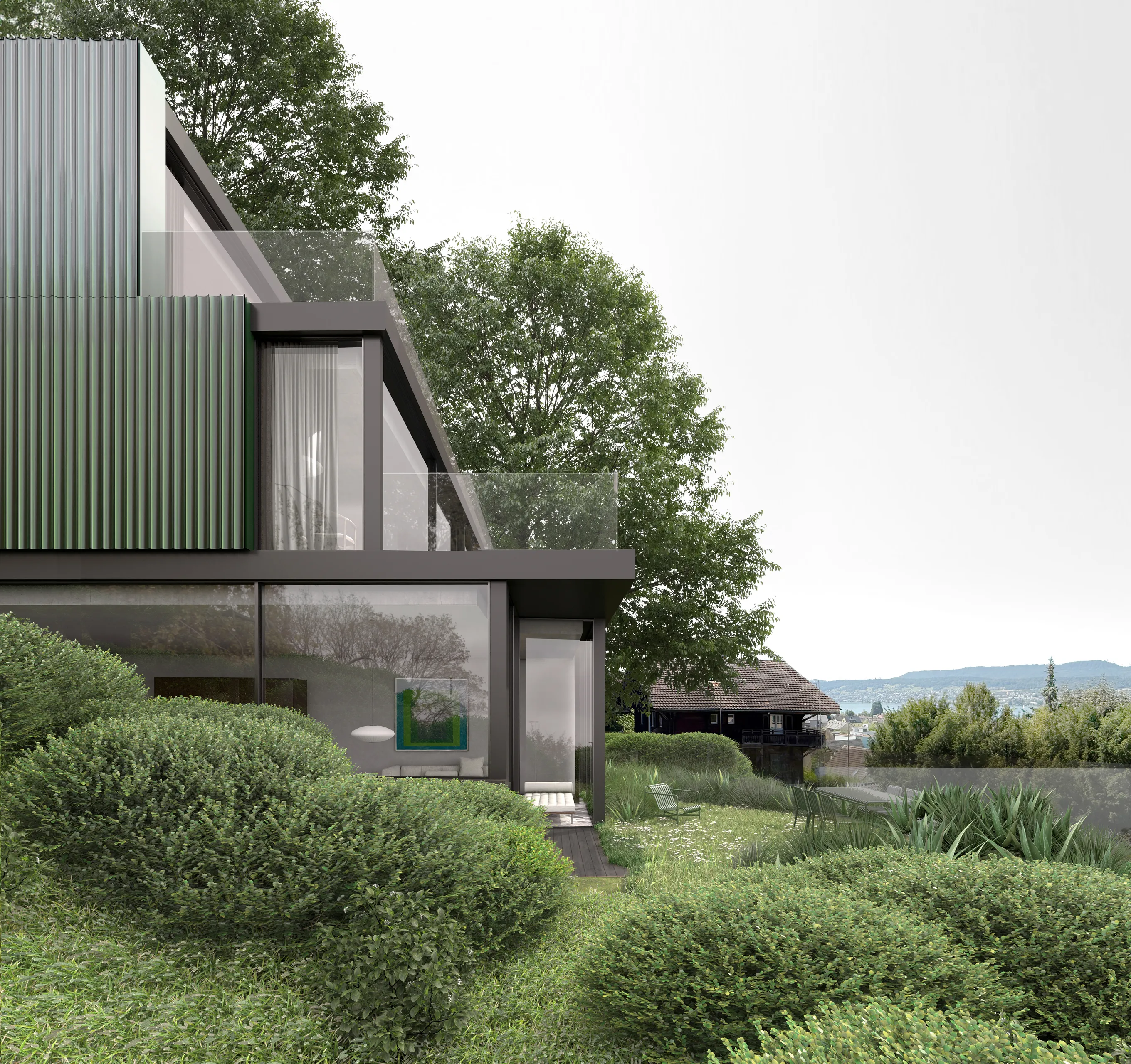
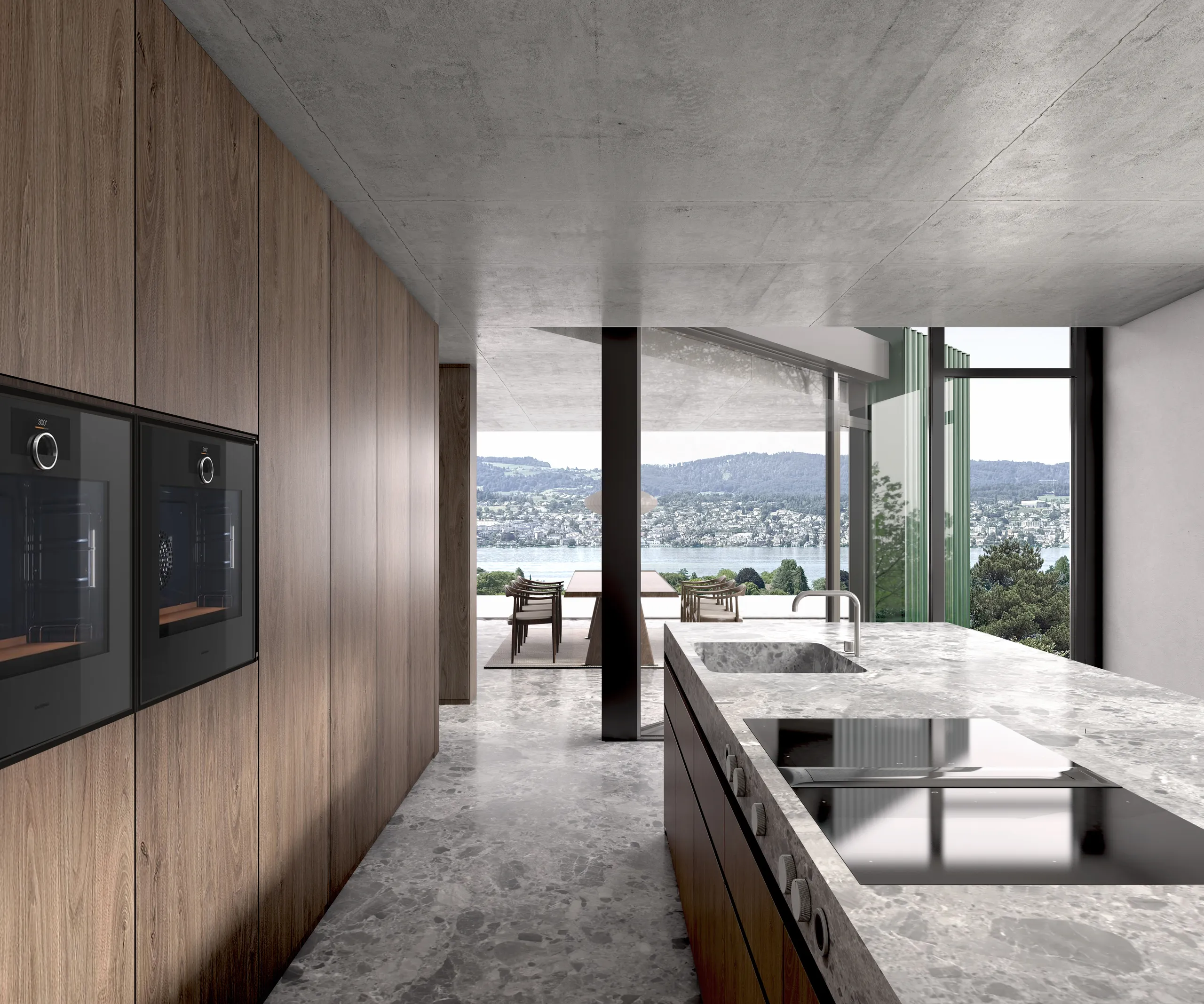
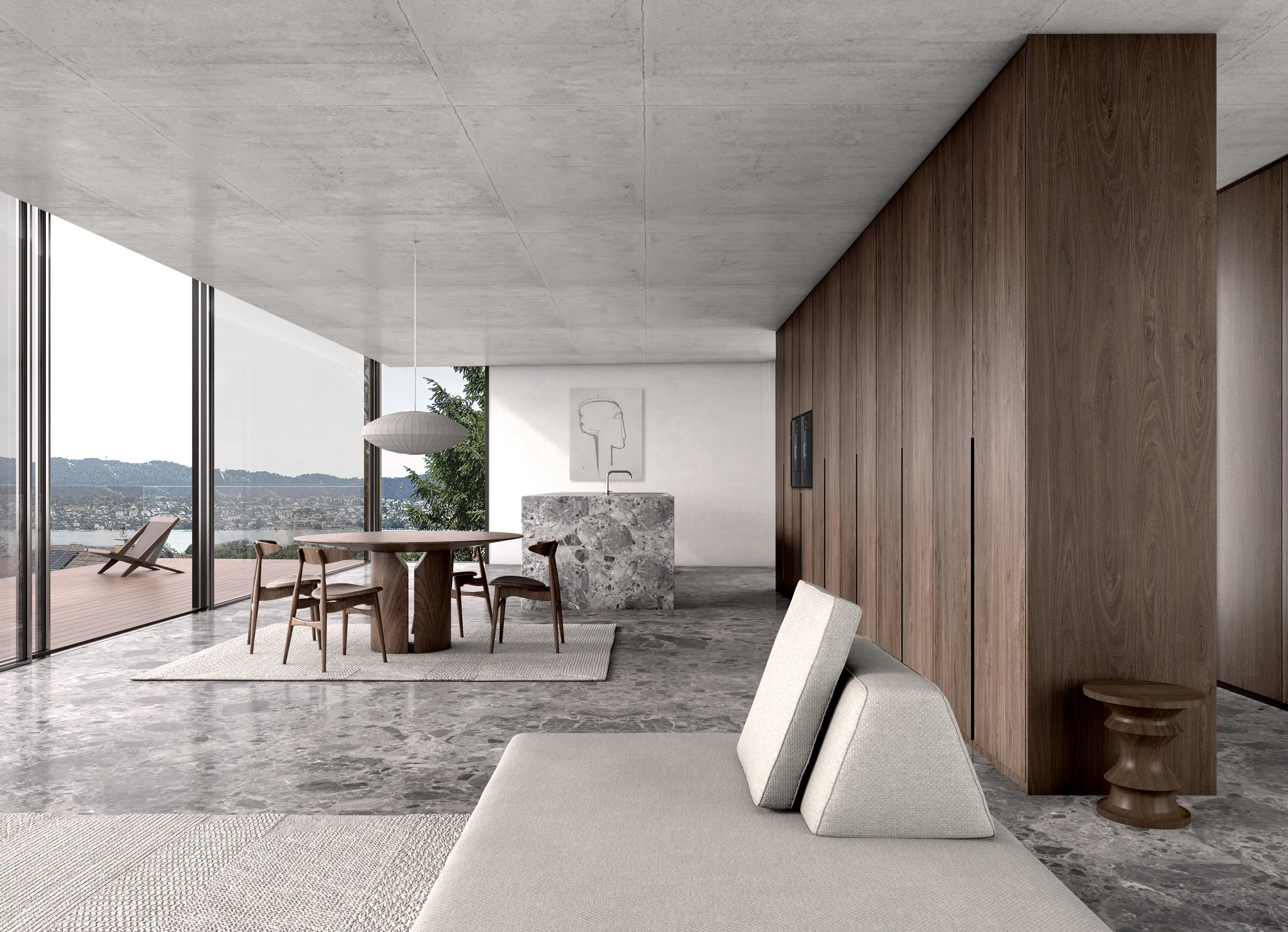
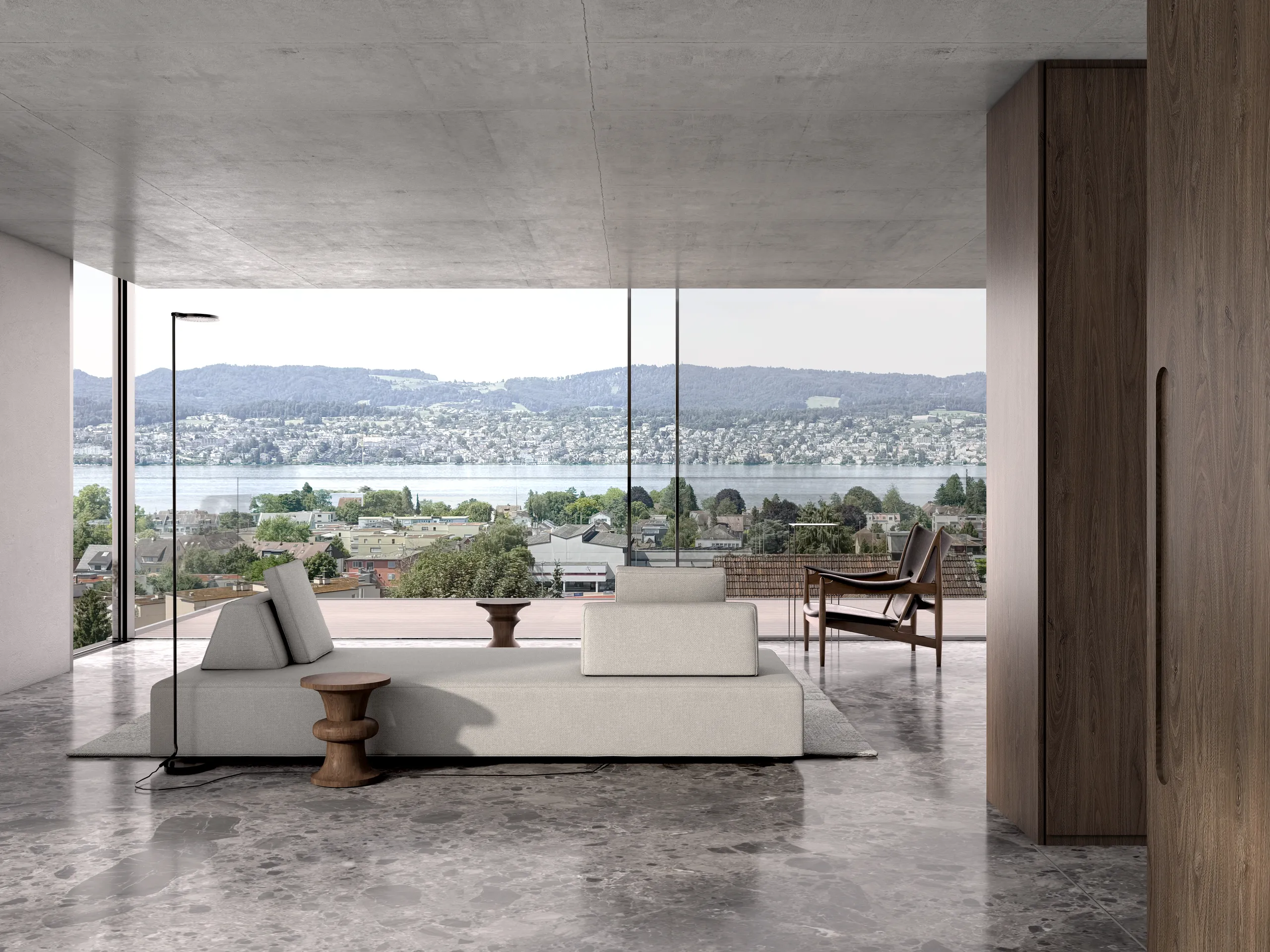
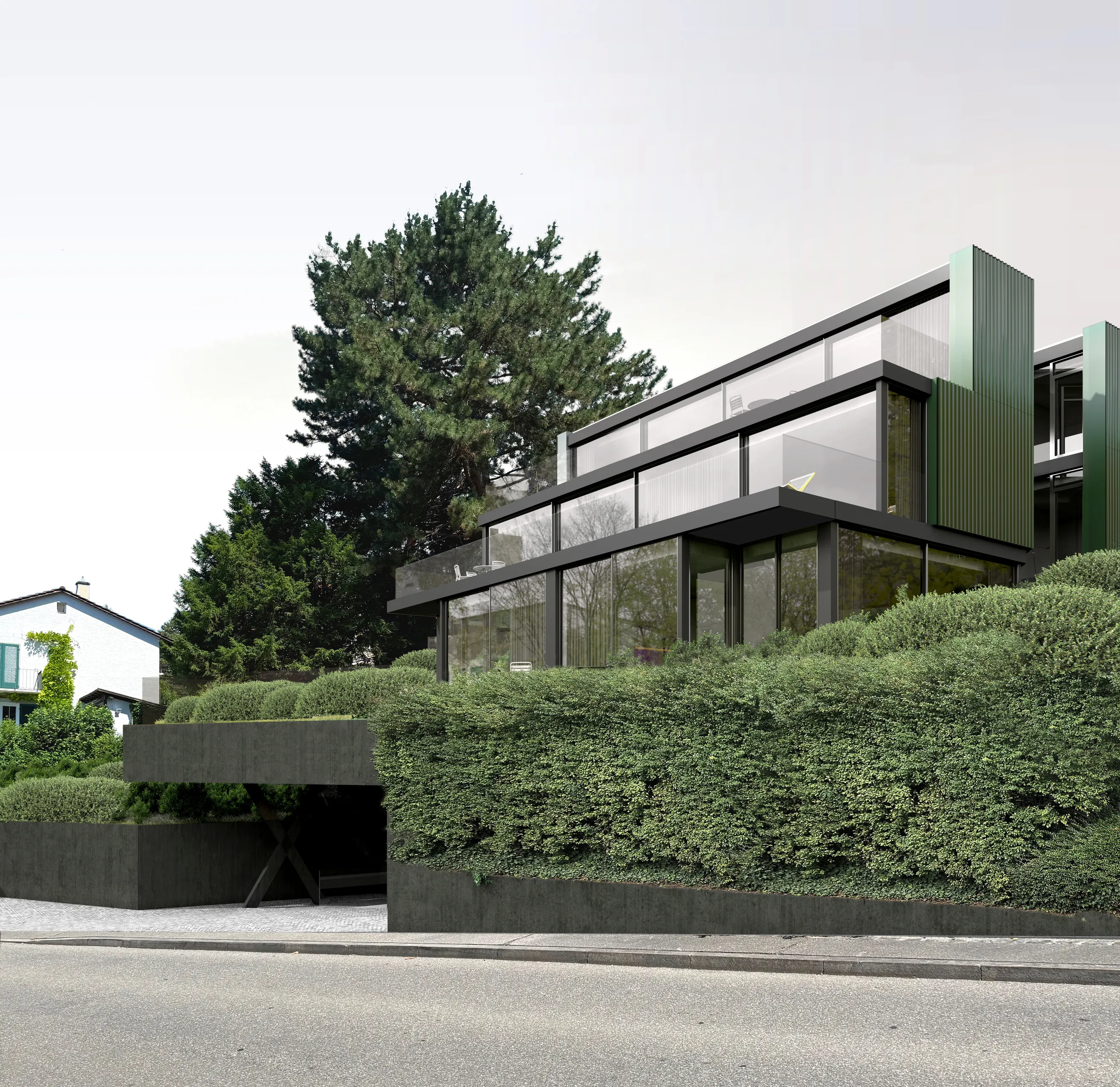
B9 in Küsnacht engages with an archetypal condition of building on a steep hillside: a small, sharply inclined plot along a major traffic axis with views of the lake yet exposed to a high degree of neighbouring density. The architecture does not respond with an iconic gesture, but with a precise reconfiguration of the relationship between topography, circulation and dwelling, aiming to turn the slope itself into the project’s defining typology.
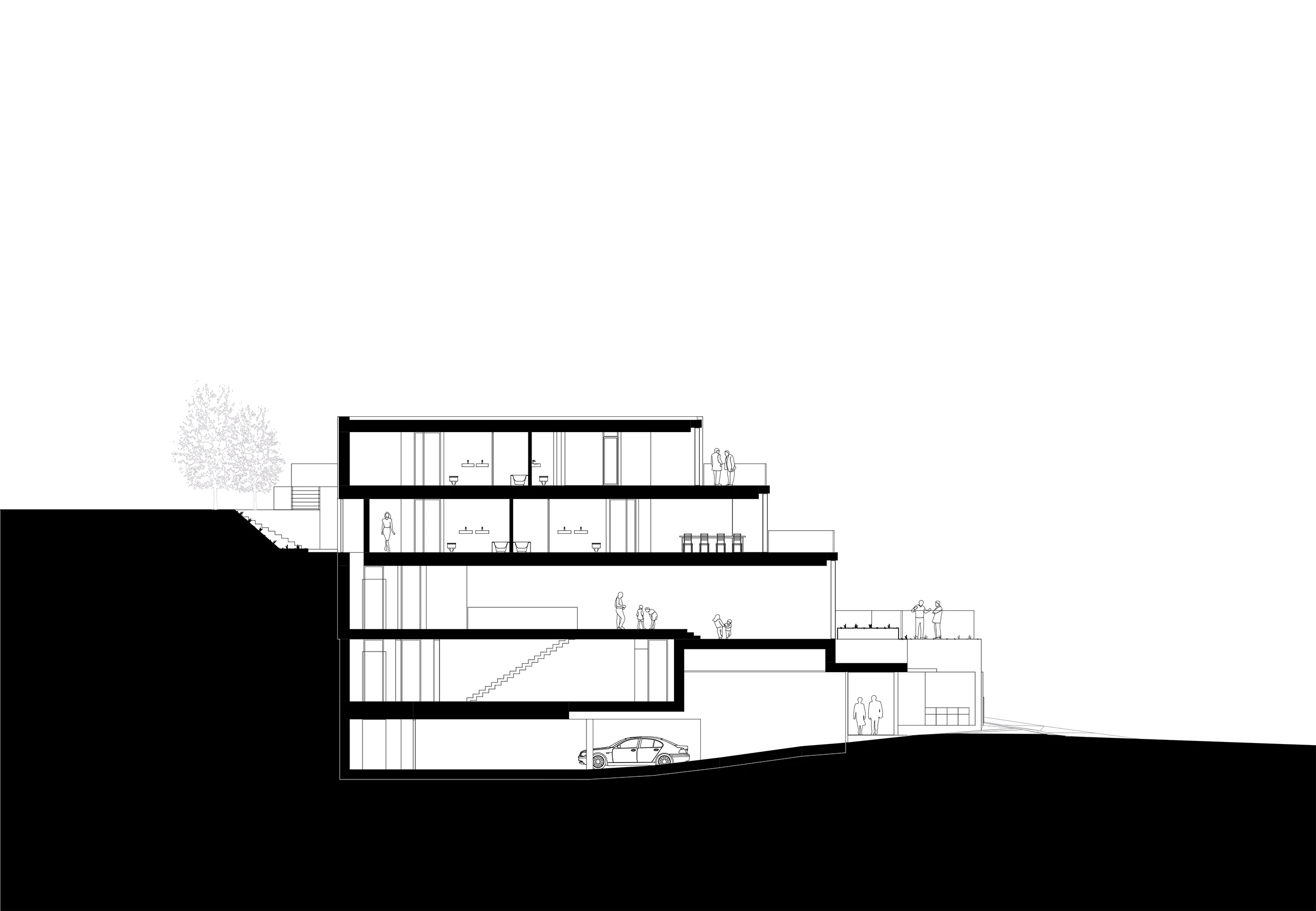
In this context, Bergstrasse functions as an infrastructural seam between the village centre and Forch, marking a threshold between the horizontal logic of traffic and the vertical logic of the terrain. B9 positions itself precisely within this field of tension and understands the steep site not as a formal constraint, but as a structural guiding figure: the inclination of the slope determines orientation, vertical stratification, access and ultimately the internal organisation of the four residential units.
Terraced units as an alternative to the conventional multi-family house
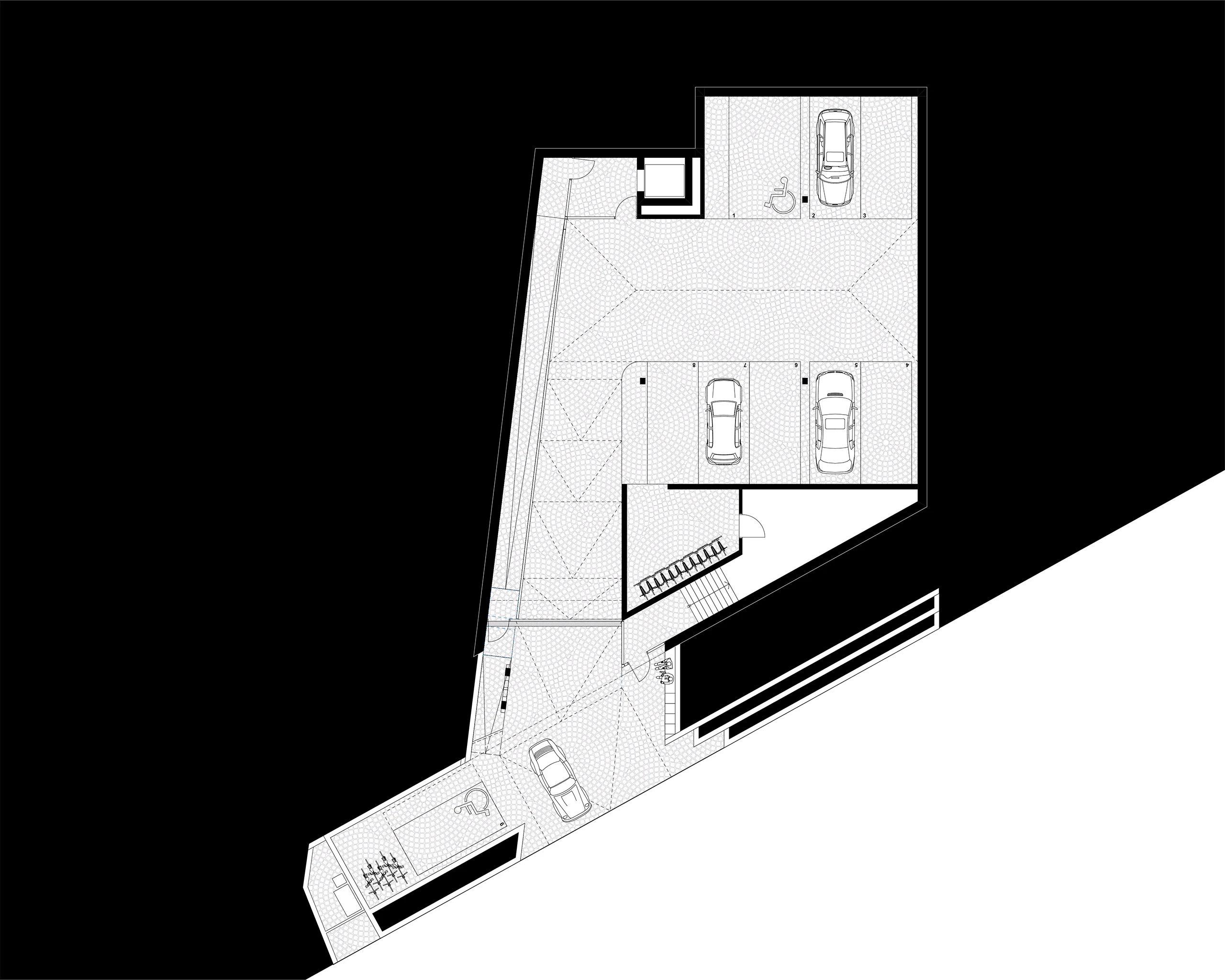
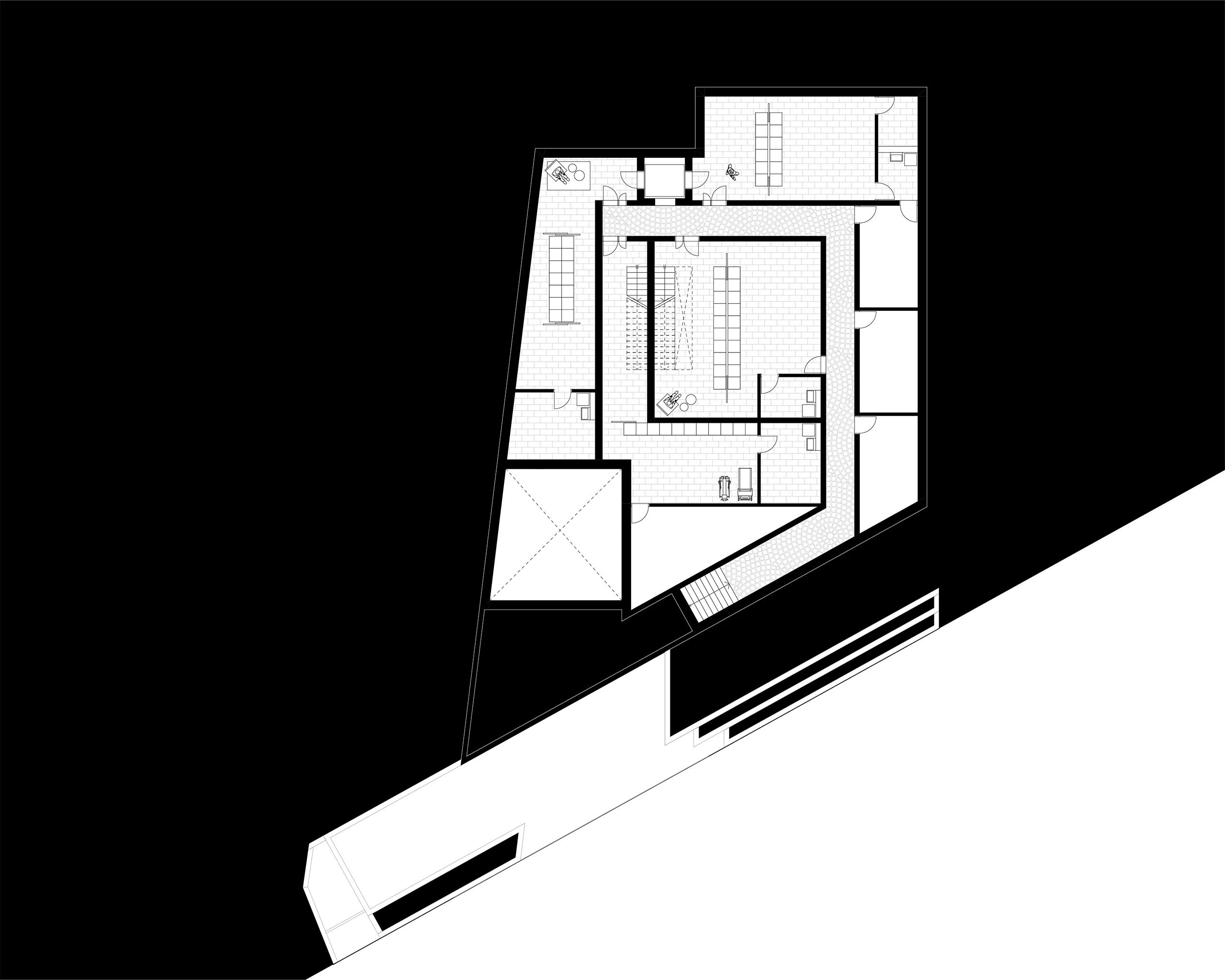
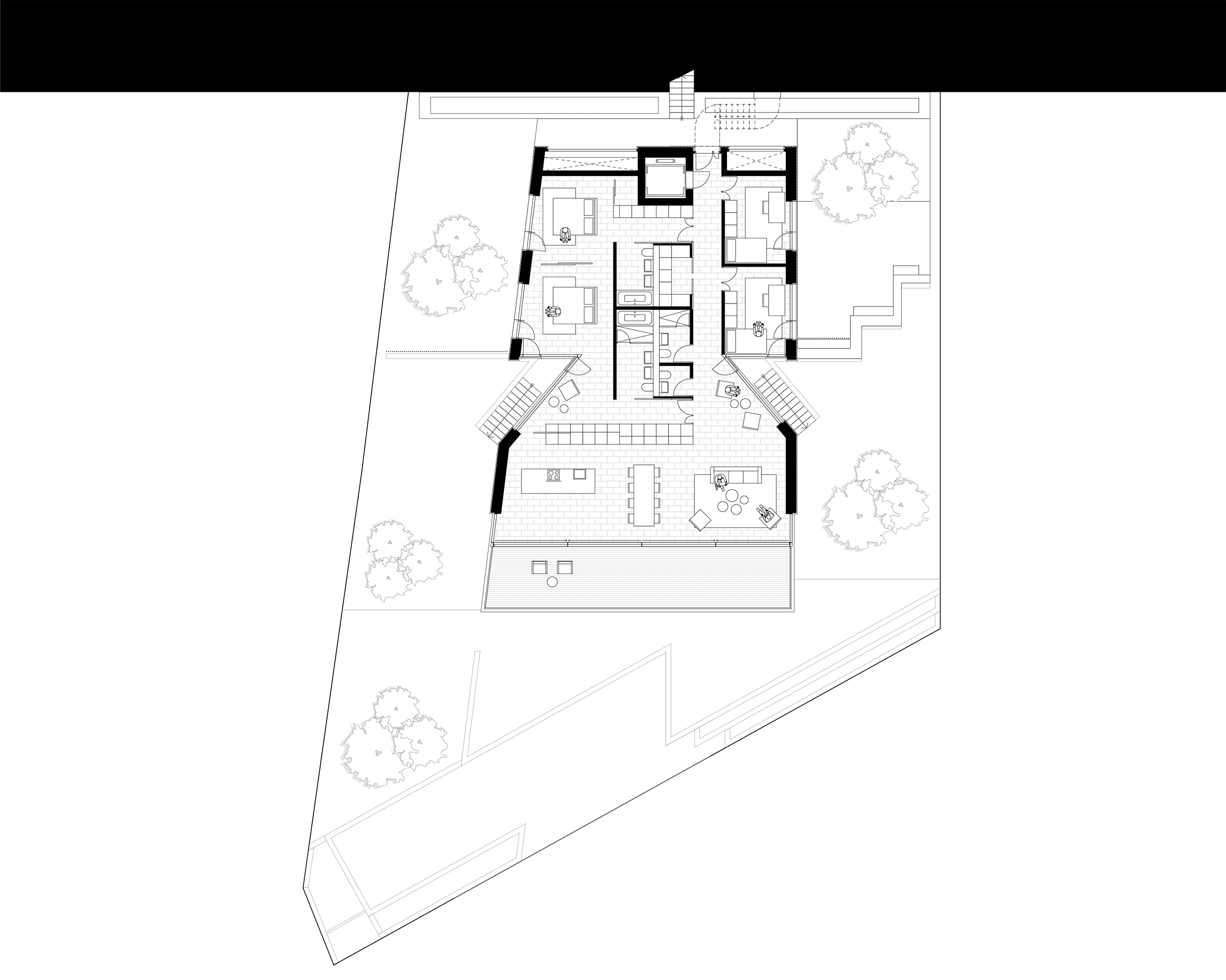
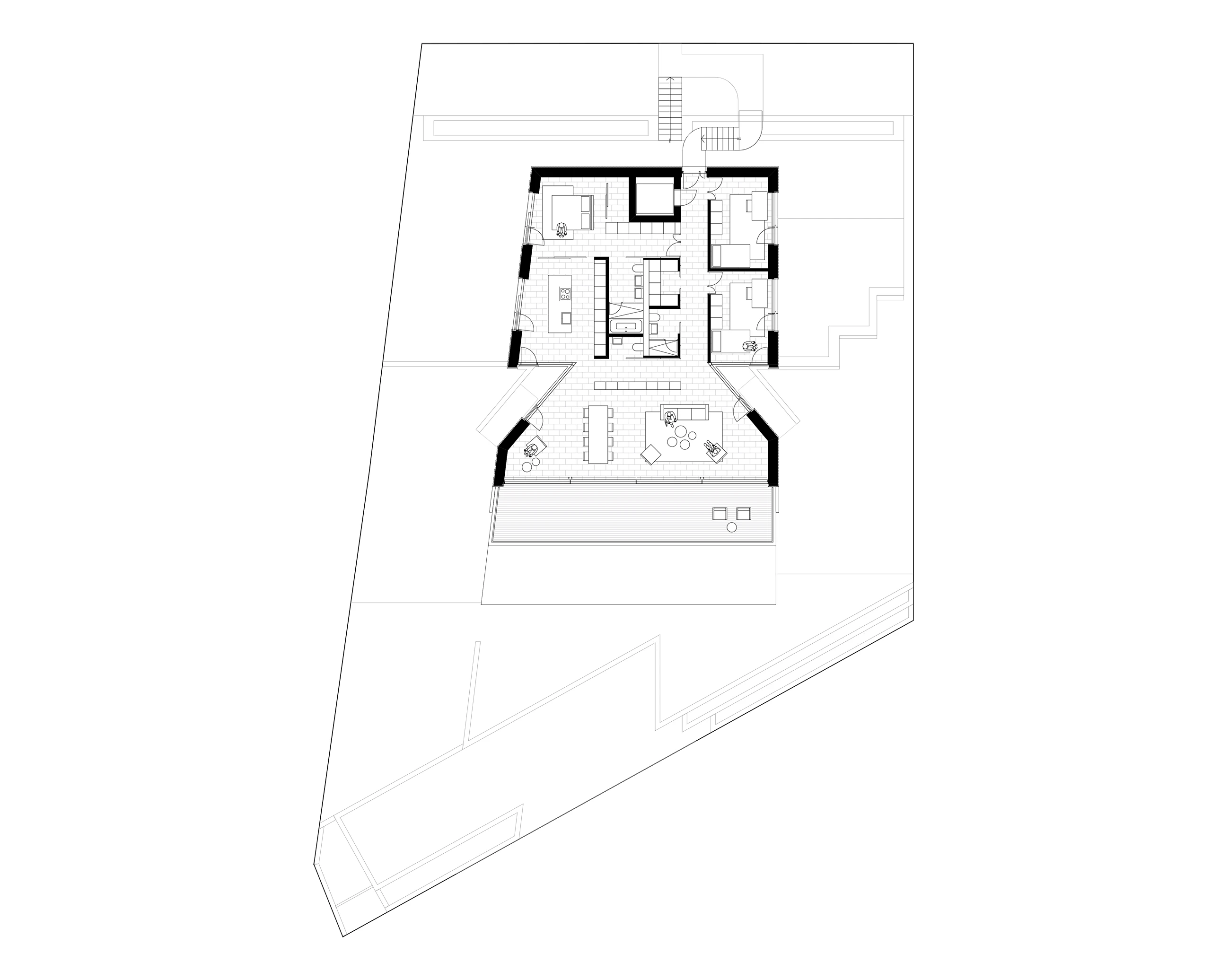
Conceptually, B9 proposes an alternative typology to the established image of the luxurious multi-family house on Lake Zurich. Instead of a central staircase that links all floors in a serial fashion, the four units are each directly connected via the basement level and the terrain, behaving in their spatial figure more like staggered single-family houses.
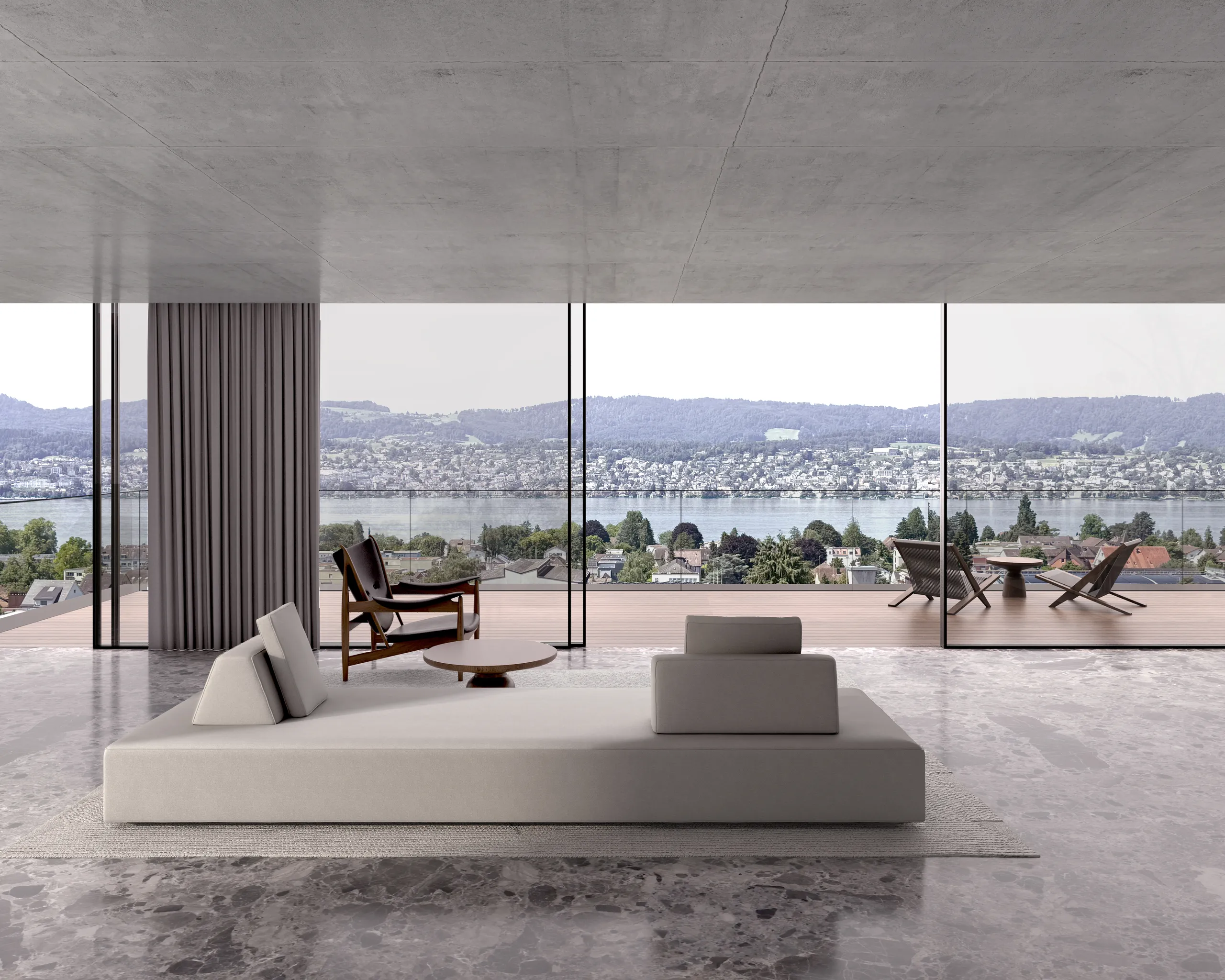
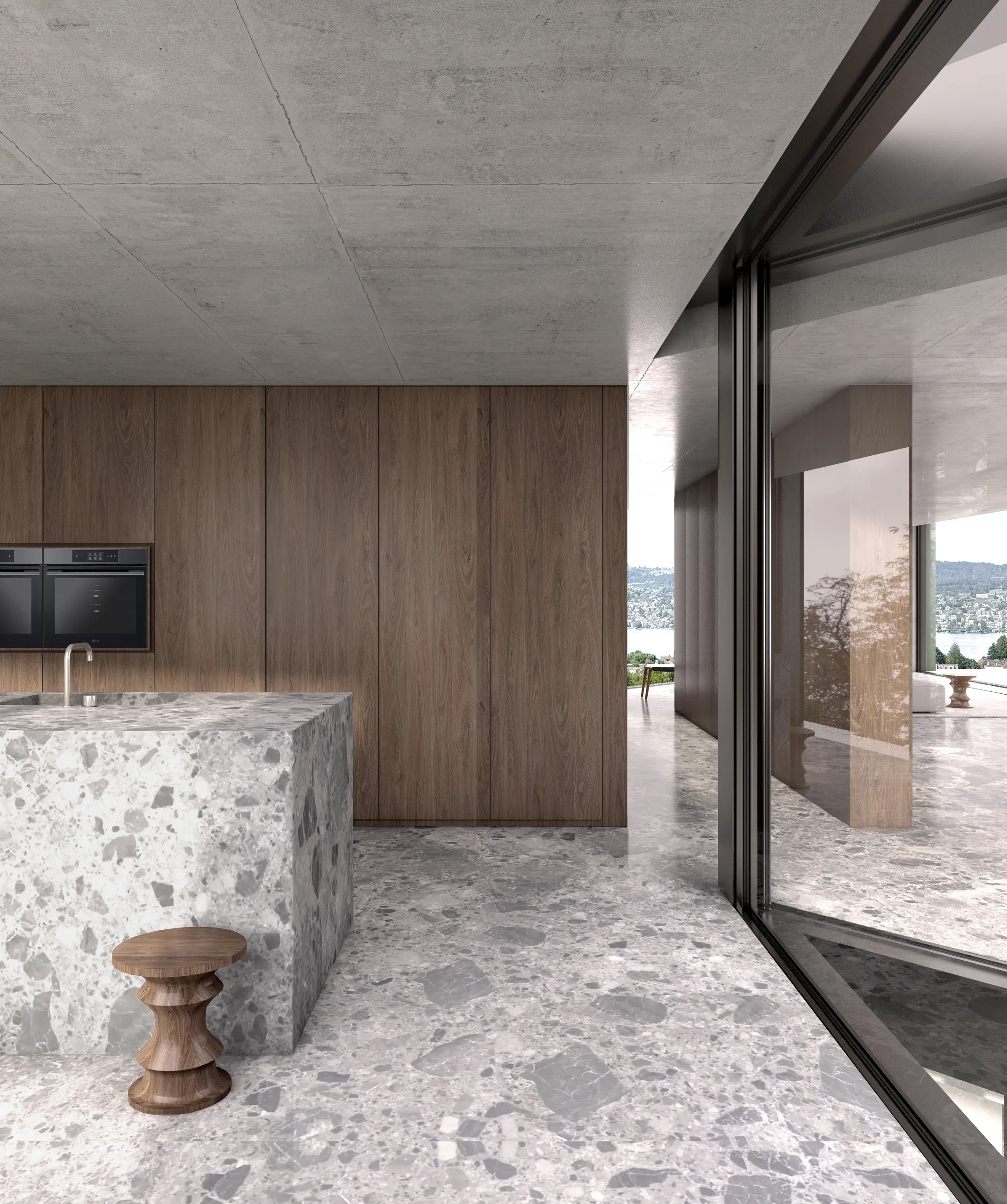
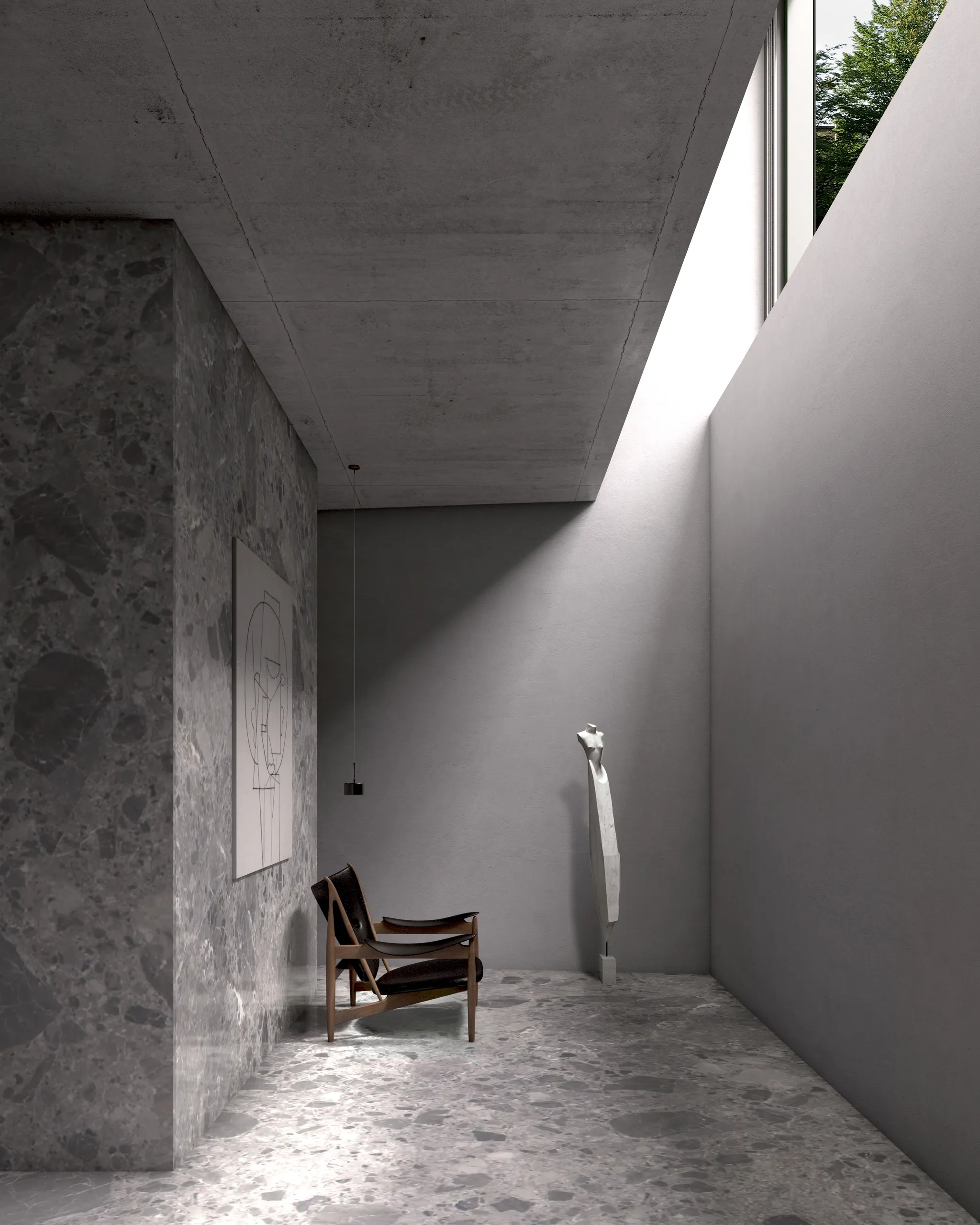
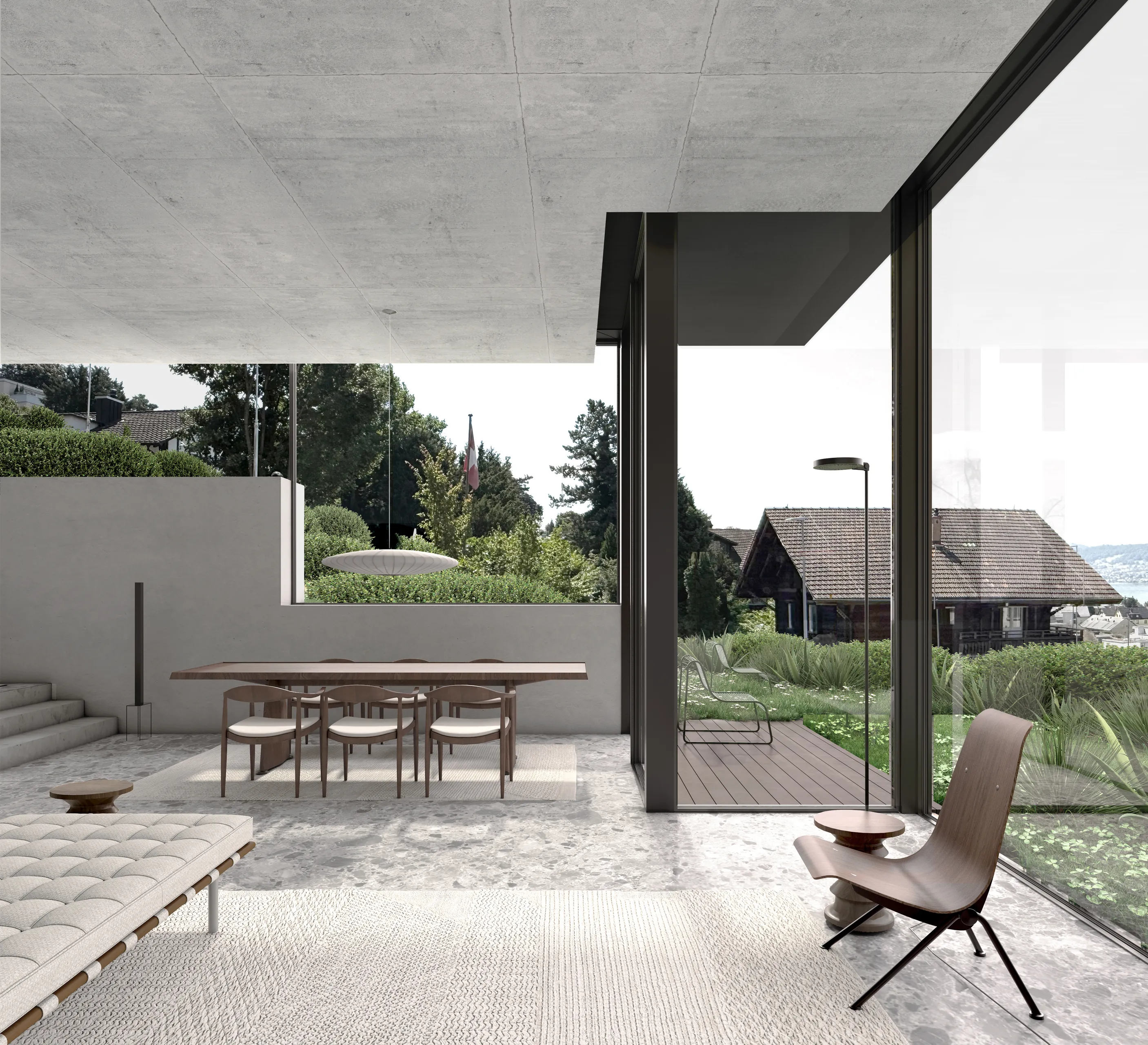
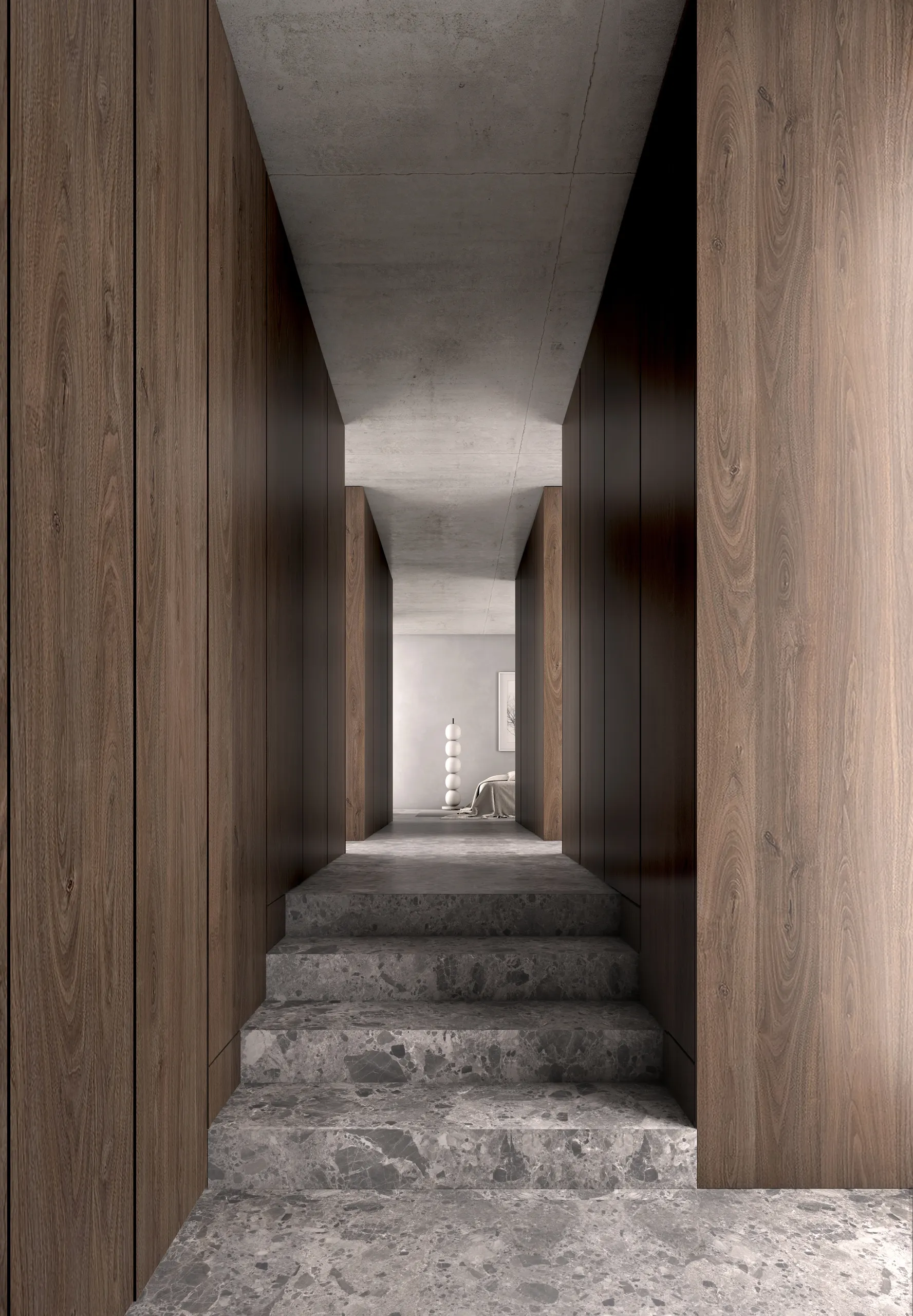
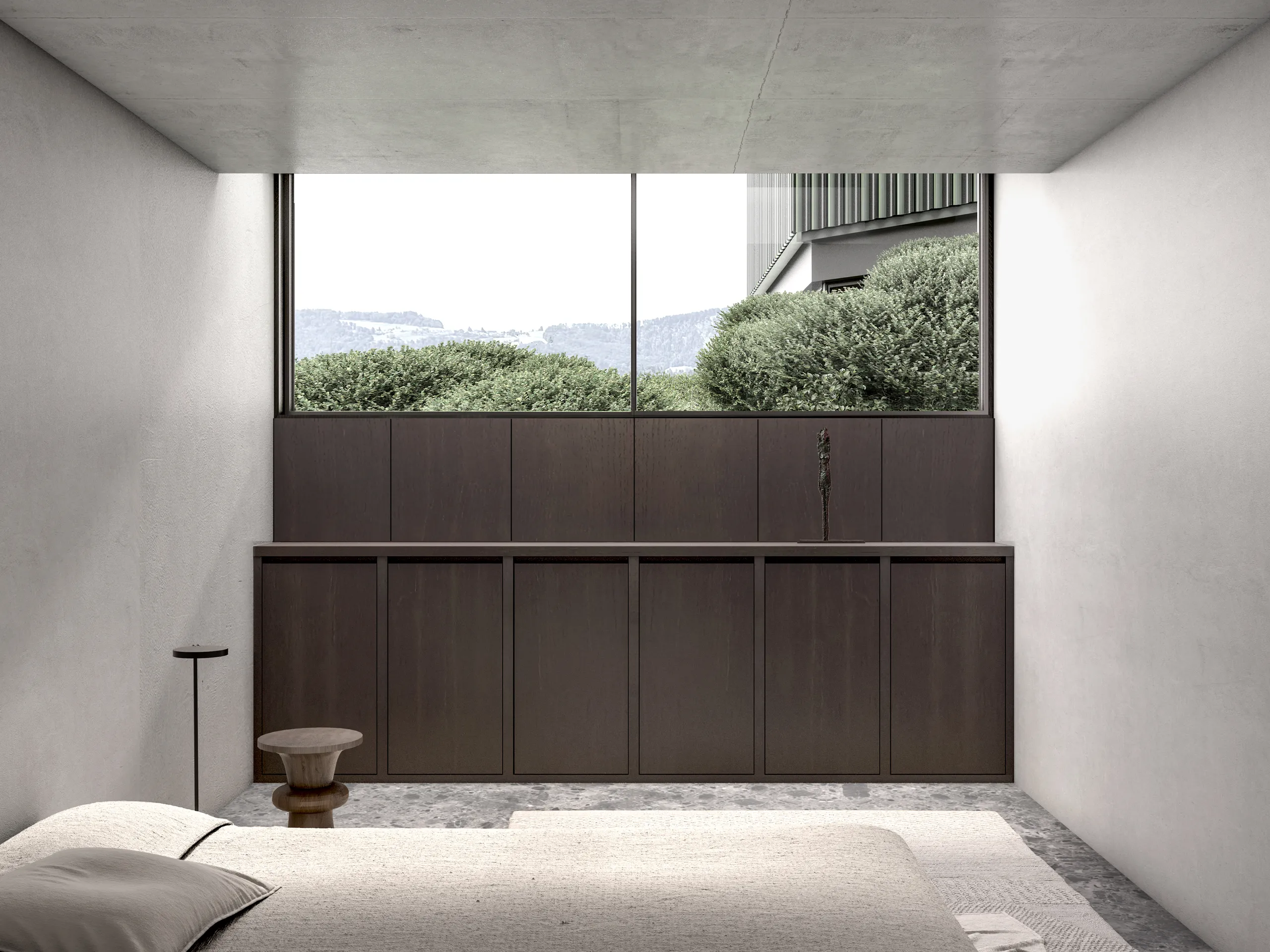
This shift from horizontal to vertical neighbourhood produces a different notion of exclusivity: not the number of rooms or the size of terraces takes precedence, but the individual relationship of each apartment to the slope and to the horizon of the lake. The two garden-level residences transform the basement – traditionally a secondary, technical domain – into a differentiated living level with stepped room heights (approximately 2.40 m, 2.90 m and 3.35 m), double-height zones and daylight from above, thereby generating an autonomous, vertically layered living landscape.
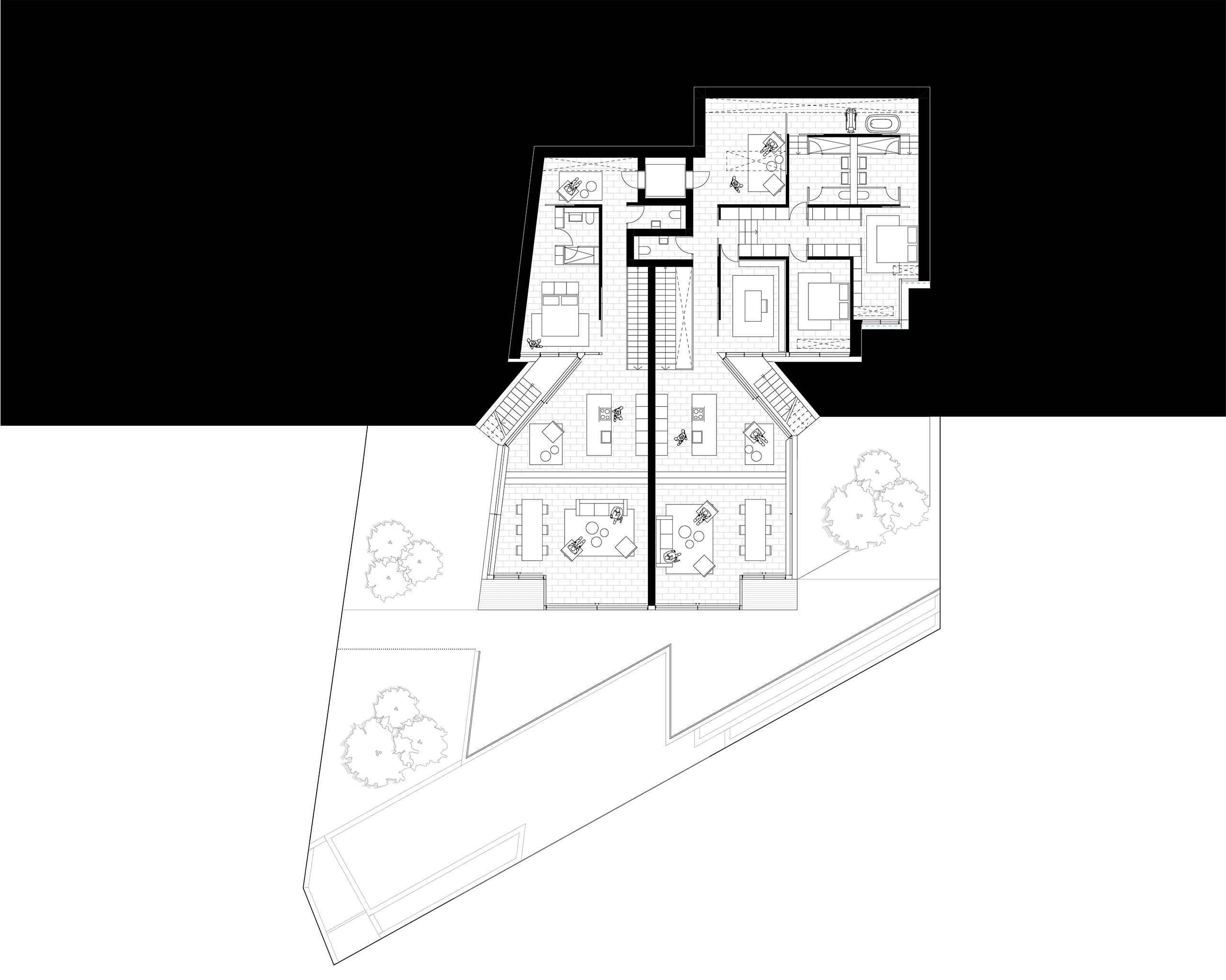
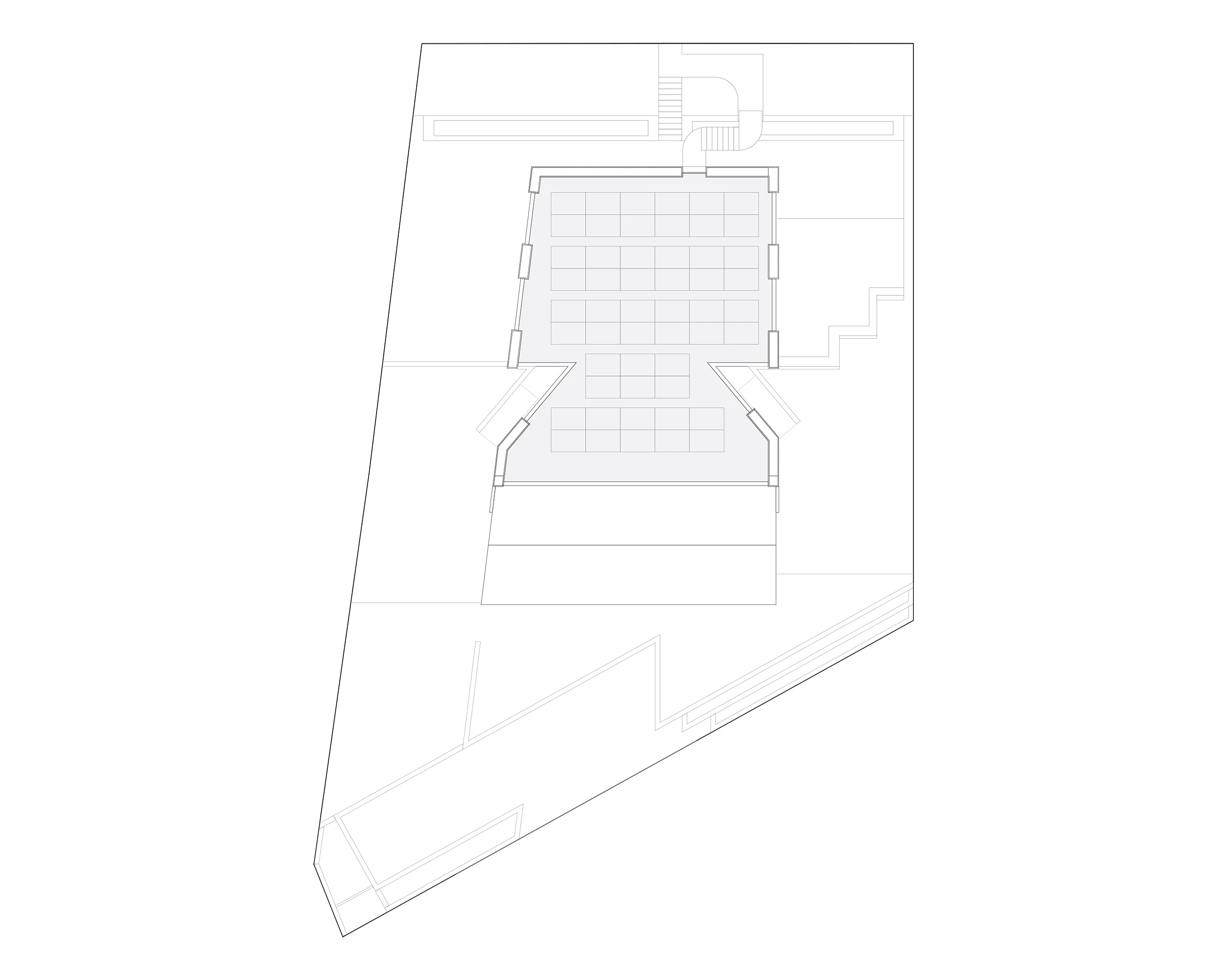
The levels above – ground floor and upper floor – continue this logic without simply being stacked on top. Rather, a spatial stratification emerges in which each unit develops its own degree of openness, retreat and visual connection, while the overall figure remains legible as a coherent volume.
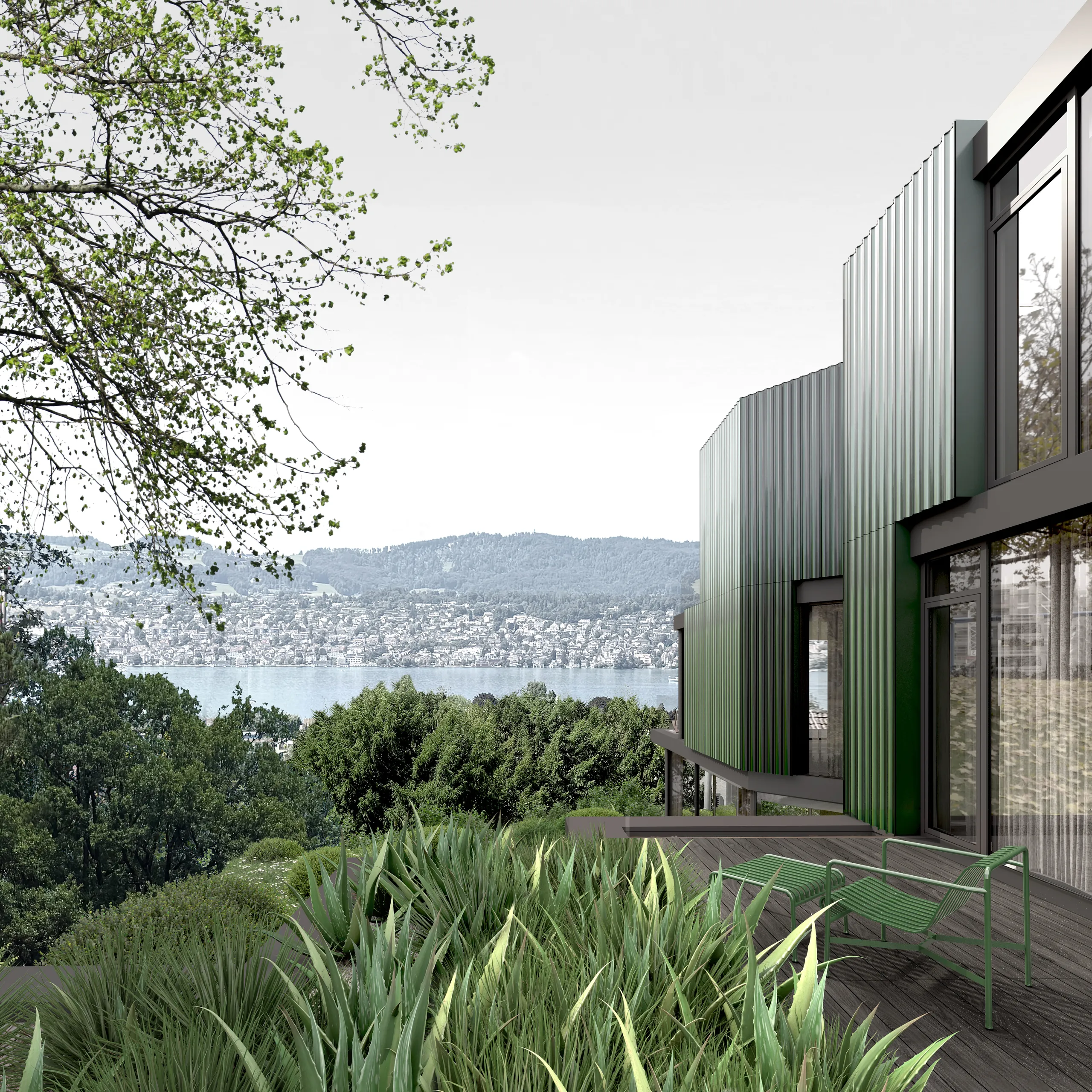
The two lateral incisions are more than formal gestures: they articulate an architectural response to the question of how light, depth and views can be created for spaces situated in the “second row”. By cutting cones of light and visual axes deep into the volume, they produce a sequence of inside–outside–inside, in which living space, terrace, incision and landscape condense into a continuous spatial chain.
This spatial dramaturgy makes the slope tangible as a succession of thresholds: from the protected realm of the basement, across semi-public terraces, to the open view towards the lake. The incisions operate on three levels simultaneously: as instruments of illumination, as optical filters and as social regulators that calibrate proximity and distance within the vertical neighbourhood.
Green terracotta as a layer of memory
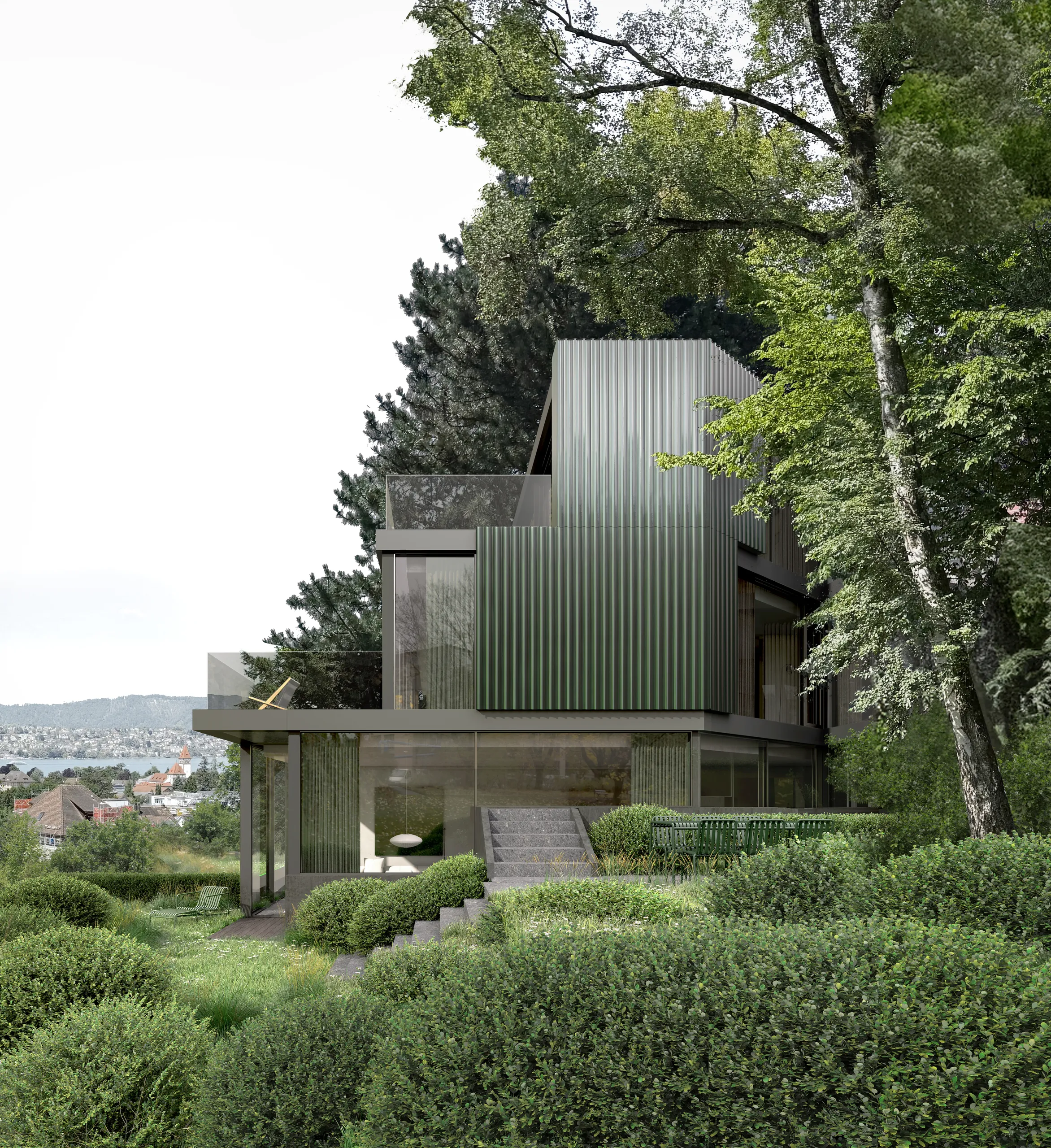
The decision to use a green glazed terracotta façade is conceived as a deliberate layer of memory. In the early planning phase, the plot was wrapped in dense tree vegetation that largely veiled the view of the lake and initially rendered the site as an introverted terrain enclosed by greenery.
With the clearing of the view, the perceptual focus shifts from the near to the far, and the physical presence of the trees is lost in the process. The ceramic envelope translates this earlier condition into an abstract, pigmented skin that acts like a sedimented recollection – a surface that does not imitate the felled trees but preserves them as chromatic and material resonance within the project.
Through the reflection of light and the changing depth of colour over the course of the day, a subtle dialogue unfolds between façade, vegetation and lake. In this way, B9 becomes a house that responds not only to its immediate surroundings, but also to the site’s past – an architecture that understands context not only in topographical, but also in temporal terms.